AMD Local AI: How to Run 235 Billion Parameters
Discover how the new AMD Local AI chiplet architecture allows you to run a massive 235 billion parameter model directly on your PC.Checkout my latest blog about this intresting shift.
Back with consistency lets goo !
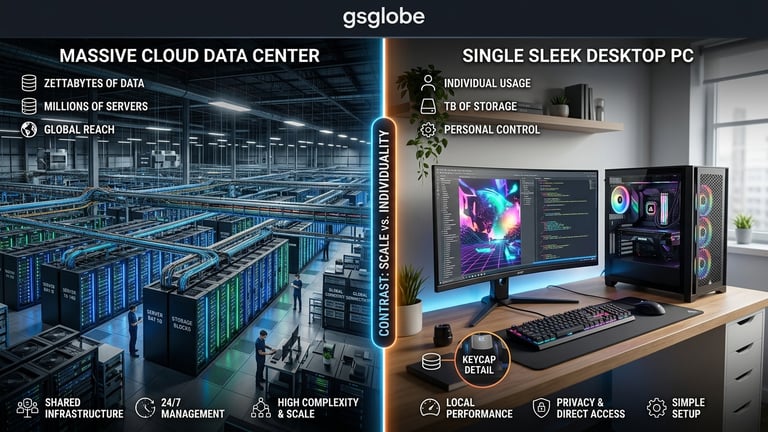
For the past two years, the AI revolution has been entirely dependent on the cloud. If you wanted to run a truly powerful Artificial Intelligence model, you had to ping massive, multi-billion-dollar data centers owned by OpenAI, Google, or Anthropic. Running heavy AI locally on your own computer was almost impossible—until now.
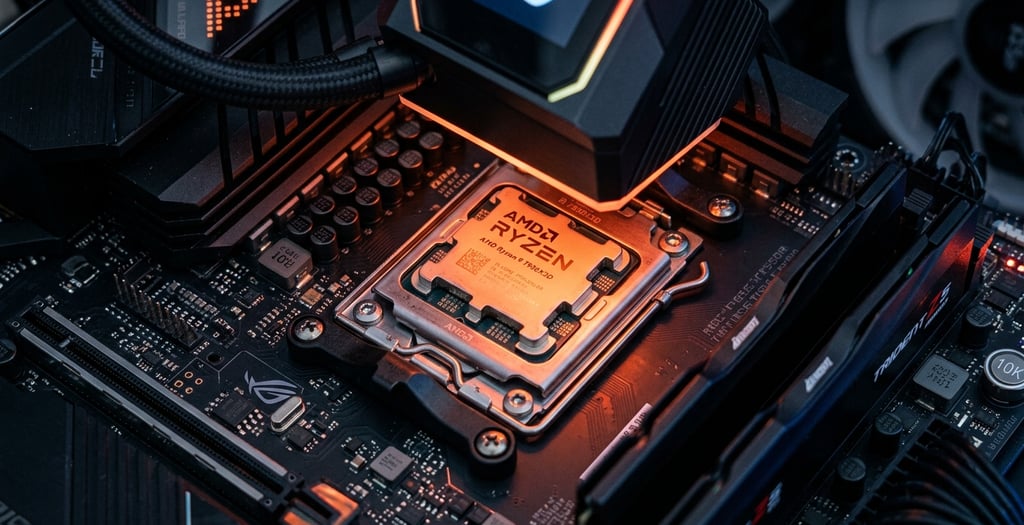
In a recent, jaw-dropping announcement, AMD CEO Lisa Su just changed the future of AI hardware. She introduced a powerful new semiconductor innovation that is capable of running a massive 235 billion Parameter AI Model directly on a single, local PC.
This isn't just a minor hardware upgrade; this is a complete redefinition of how AI applications will be built and deployed in the future. Here is why the era of the "cloud monopoly" might be ending, and why the power of the data center is finally moving to your desk
The 235 Billion Parameter Problem
To understand why this announcement is so revolutionary, you have to understand what "235 billion Parameters" actually means.
Parameters are essentially the "brain cells" of an AI model. The more parameters a model has, the smarter, more nuanced, and more capable it is. For context, some of the most popular open-source models that developers currently struggle to run locally (like Llama 3) sit around 8 to 70 billion parameters.
Running a 235B parameter model requires an absurd amount of computational power and, more importantly, an incredible amount of memory (VRAM). Until now, trying to run a model that big on a consumer or even a high-end workstation PC would instantly crash the system.
By proving that a single PC architecture can handle a 235B model, AMD is effectively saying that you no longer need to pay expensive API fees to access elite-tier intelligence. You can host it yourself.
How Did AMD Do It? (The Hardware Magic)
You can't achieve this kind of performance by just making a standard silicon chip slightly bigger. AMD had to completely rethink semiconductor architecture.
The secret sauce behind this massive leap in local AI processing comes down to a few key physical hardware innovations:
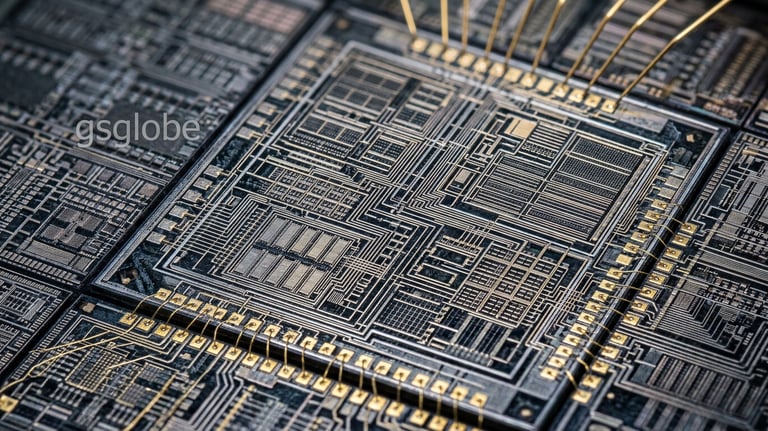
Chiplet Architecture: Instead of trying to carve one massive, perfect chip out of silicon (which is incredibly difficult and expensive), AMD uses a "chiplet" design. They stitch multiple smaller, highly efficient chips together to act as one giant mega-processor.
Unified Memory: This is the real gamechanger. Usually, the CPU and the GPU in your computer have separate pools of memory, causing a massive bottleneck when moving data back and forth. AMD's unified memory architecture allows all processors to access the exact same pool of ultra-fast memory simultaneously, eliminating the bottleneck and allowing massive AI models to load instantly.
Dedicated AI Accelerators: The silicon includes specific neural processing units (NPUs) that are physically hardwired to do nothing but calculate AI math as fast as possible.
A Massive Wake-Up Call for VLSI Students
I want to take a second to talk to the engineering students reading this. If you are studying VLSI (Very Large-Scale Integration), this announcement is much more than just a cool tech news headline. It is a massive neon sign pointing to your future career.
For the last decade, software engineers have stolen all the glory. But the AI revolution has hit a physical hardware wall. We can write all the advanced AI software we want, but if we don't have the silicon to run it, the industry stalls.
The future of AI is now entirely dependent on Physical Design, AI Accelerators, and next-generation semiconductor technologies. The industry desperately needs hardware engineers who understand how to design chiplet architectures and manage unified memory at a microscopic scale. If you are a VLSI student right now, you are sitting on a goldmine of future opportunity.
The End of Cloud Dependency?
So, what does this mean for the average developer and consumer?
It means privacy, speed, and independence. When you run an AI model locally on an AMD-powered PC, your data never leaves your desk. You don't have to worry about your proprietary code being used to train a public model, and you don't have to pay a monthly subscription fee or API cost.
The data center isn't dying, but its absolute monopoly over elite AI is cracking. Thanks to AMD, the future of AI is personal, local, and incredibly powerful.
What do you think? Would you rather buy a massively expensive AMD rig to run AI locally, or just keep paying a monthly fee to use cloud models like ChatGPT? Let me know in the comments below!