Why China Dropped 2000 Underwater Data Centers (My View)
Discover why China Telecom just dropped 2000 underwater data centers into the ocean to cool their AI servers and save massive amounts of money.Checkout now
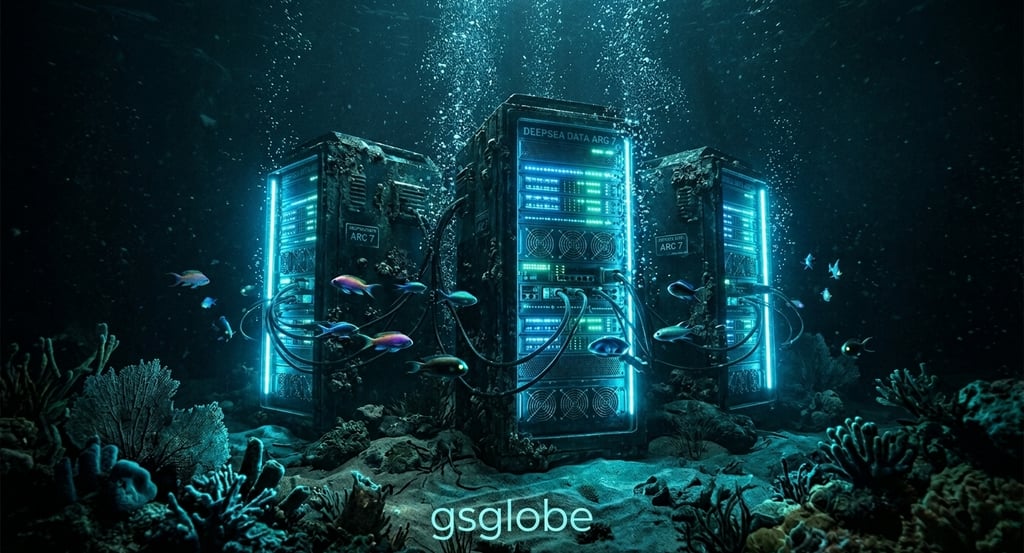
We are officially entering the wildest era of technology in human history. To feed the incredible intelligence of our new AI models, we are literally shooting servers into the vacuum of space and sinking them to the bottom of the ocean.
If this China Telecom experiment holds up long-term, I believe we will see a massive shift in how data centers are built. The future of the internet might literally be submerged.
What do you guys think? Is sinking servers into the ocean a brilliant green-energy solution, or is it a disaster waiting to happen? Let me know in the comments below!
Day 2 after a small break Now Iam Back with another Boom Topic are u ready?
If you have been following my recent articles on GSGLOBE, you know that the Artificial Intelligence industry has a massive, glowing red problem: Heat.
Training next-generation AI models requires massive arrays of GPUs running at maximum capacity 24 hours a day. These server farms generate so much heat that tech companies are spending billions of dollars just trying to stop them from literally melting. We recently talked about how some companies are looking to space to cool their servers in a vacuum.
But what if the ultimate cooling system isn't in the stars, but at the bottom of the ocean?
In a move that sounds like the plot of a James Bond movie, China just deliberately dropped 2,000 high-end servers straight into the ocean off the coast of Shanghai. Here is why this crazy experiment might be the brilliant future of AI infrastructure
When I first heard about this, I thought it was a joke. Water and electricity are the two things you generally want to keep as far away from each other as possible. But this isn't a hasty experiment; it is a highly calculated engineering marvel run by China Telecom.
The 2,000 servers aren't just sitting in the water. They are completely sealed inside heavy, submarine-grade titanium capsules. These pressure vessels were carefully lowered to a depth of 35 meters (about 115 feet) below the surface of the ocean near Shanghai.
Inside these capsules, the AI models are currently running at full capacity. They are processing massive amounts of data for China Telecom right now, sitting in total darkness surrounded by marine life
The 80% Cooling Miracle
So, why go through the ridiculous effort of waterproofing thousands of servers? It all comes down to the cooling bill.
On land, cooling a traditional data center is an absolute nightmare. Companies have to build massive industrial air conditioning units and pump millions of gallons of chilled water through their facilities every single day. The cooling systems often consume as much electricity as the servers themselves, eating up billions of dollars in operational costs.
At 35 meters deep, the ocean naturally acts as a massive, free, infinite heat sink. The cold seawater constantly flows over the submarine capsules, effortlessly absorbing the heat generated by the GPUs. By letting the ocean handle the temperature regulation naturally, China Telecom managed to cut their data center cooling costs by over 80%.
When you are spending billions on AI infrastructure, an 80% cost reduction isn't just a fun statistic; it is a total gamechanger for the industry.
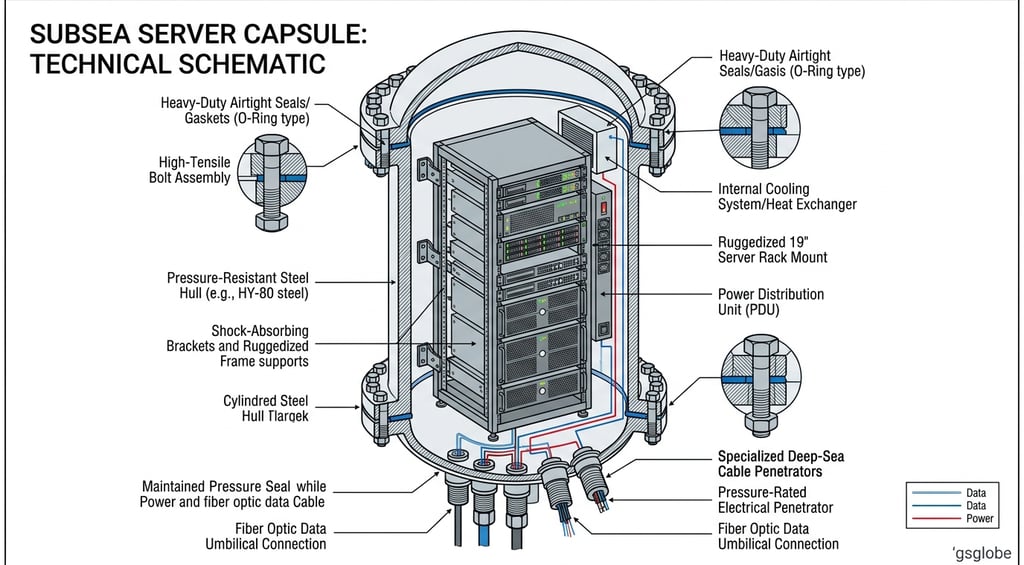
The brilliant engineering doesn't stop at cooling. One of the biggest complaints environmentalists have about AI is the massive carbon footprint caused by plugging these server farms into the standard power grid, which still relies heavily on coal and natural gas.
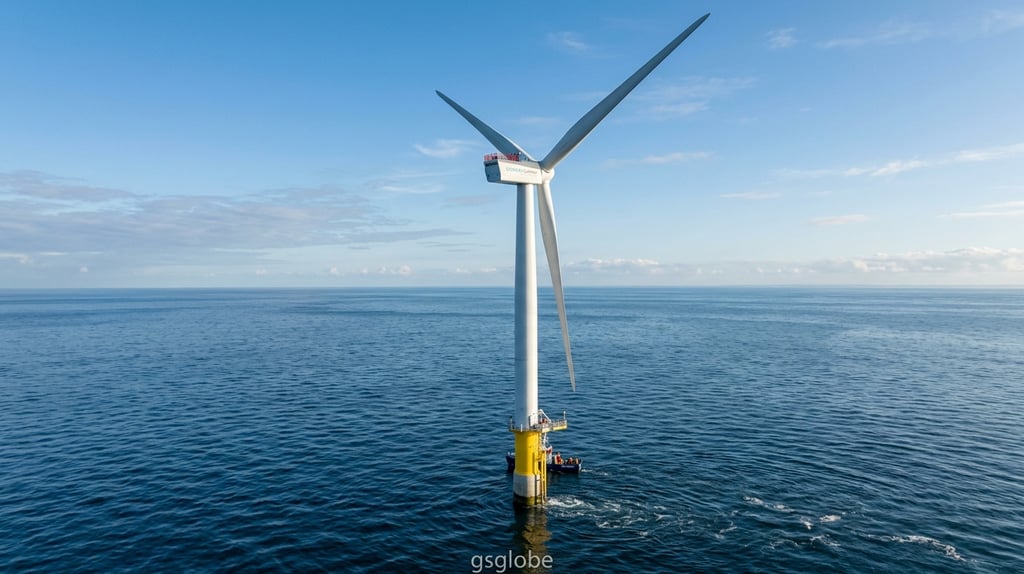
China Telecom completely bypassed the traditional grid for this project. The underwater servers are powered almost entirely by offshore wind turbines floating on the surface of the ocean right above them.
The wind turns the turbines, the clean energy flows directly down the cables to the submerged capsules, and the cold ocean cools the computers. It creates an almost perfectly self-contained, green energy loop. It is one of the most environmentally friendly AI data centers ever built.
If you are a hardcore tech nerd, you might be thinking, "Wait a minute, didn't Microsoft do this first?"
You would be exactly right. Years ago, Microsoft launched Project Natick, a highly publicized experiment where they dropped a sealed capsule of servers off the coast of Scotland.
Microsoft proved that the concept was a massive success. Not only did the ocean cool the servers perfectly, but they found that the servers in the ocean had a lower failure rate than the ones on land, because there were no humans bumping into the racks and the atmosphere was pumped full of nitrogen to prevent corrosion.
But then, inexplicably, Microsoft just... quit. After proving the concept worked brilliantly, they pulled the capsule out of the water and quietly shut down the project, refusing to explain why they weren't scaling it up.
Microsoft abandoned the idea, and China immediately picked it up, scaled it up to 2,000 servers, and made it a commercial reality.