Claude Fable 5 Review: Is It Really Better Than Opus 4.8? (My Deep Dive)
Is the new Claude Fable 5 model actually better than Opus? I put it to the test on UI coding, 3D game creation, and legal analysis. Read my full review here
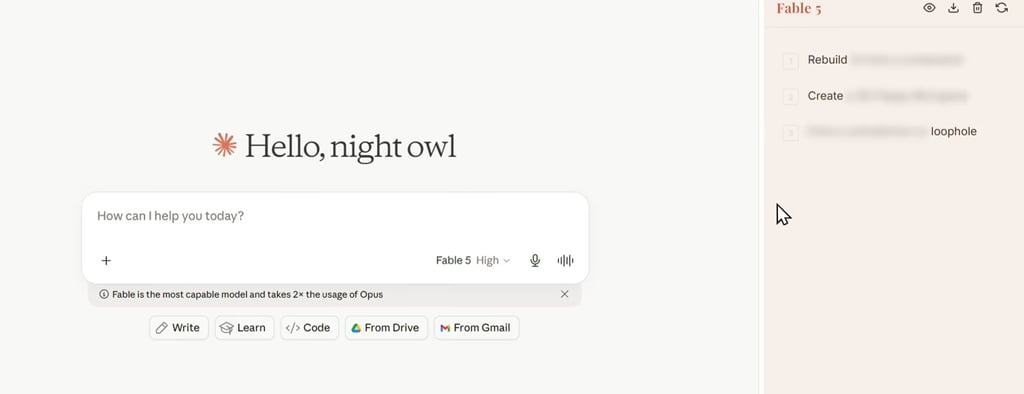
Image Source: Screenshot from on YouTube
Another day another launch of epic ai model,are you read of the deep review of the new model by anthropic called Mythos the fable 5 . lets go...
Anthropic has just shifted the entire AI landscape once again with the introduction of Fable 5. Billed as a new "Mythos-class" AI model, Anthropic has positioned it directly above the current Claude Opus lineup. If you believe the marketing, Fable 5 is designed to be the ultimate software engineering and agentic workflow machine, reportedly outperforming heavyweights like GPT-5.5 and Gemini 3.1 Pro on nearly every benchmark.
But as always, I don't trust benchmarks. I trust real-world testing.
To see if the massive upgrade cost is worth your money, we analysed a comprehensive head-to-head test of Fable 5 against Claude Opus 4.8 and Claude Sonnet. We broke down the results across four different complex scenarios: UI design, game development, legal analysis, and video generation.
Here is exactly what happened.
Test 1: UI Rebuilding (The Windows 11 Clone)
Lets get started on to the first one starting with a visual based test
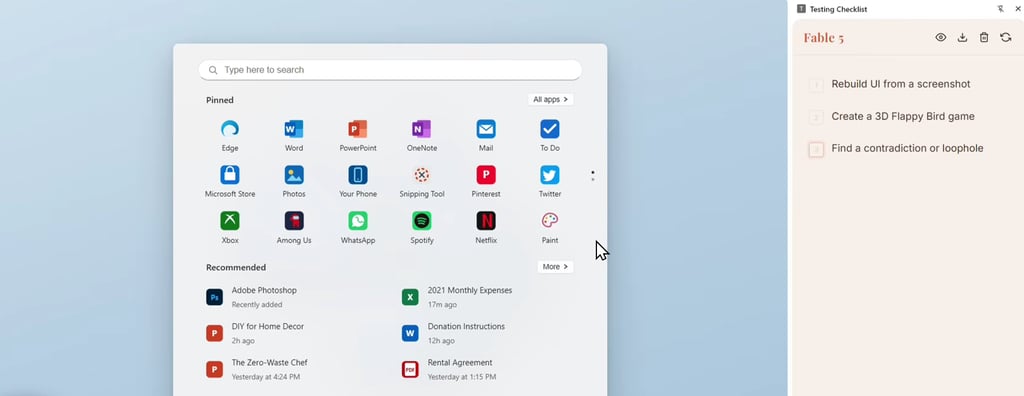
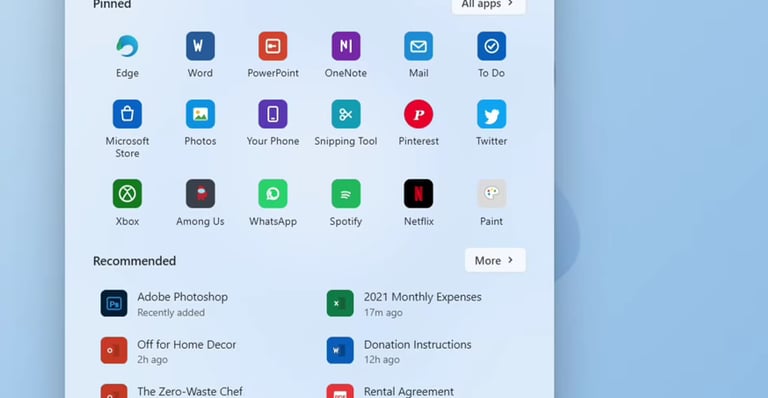
The first test was purely visual. Both Fable 5 and Opus 4.8 were given a complex screenshot of the Windows 11 desktop interface and asked to rebuild it entirely using front-end code (HTML, CSS, and JS).
The Result: Both models performed exceptionally well, generating clean code that rendered a very recognizable Windows 11 environment. However, there was a surprising twist: Opus 4.8 was slightly more accurate to the original visual reference. Fable 5 tended to over-engineer the CSS, adding unnecessary complexity where Opus kept it simple and visually identical to the prompt.
The Verdict on UI: If you are just doing basic frontend UI generation or cloning layouts, Fable 5 is massive overkill. Given the high cost of running Fable, stick to Opus 4.8 for standard web design tasks
Image Source: Screenshot from on YouTube
Test 2: 3D Game Creation (Web-Based Flappy Bird)
lets move on to the next test its very intresting one where bboth models looked to outperfrom each other based on our core review
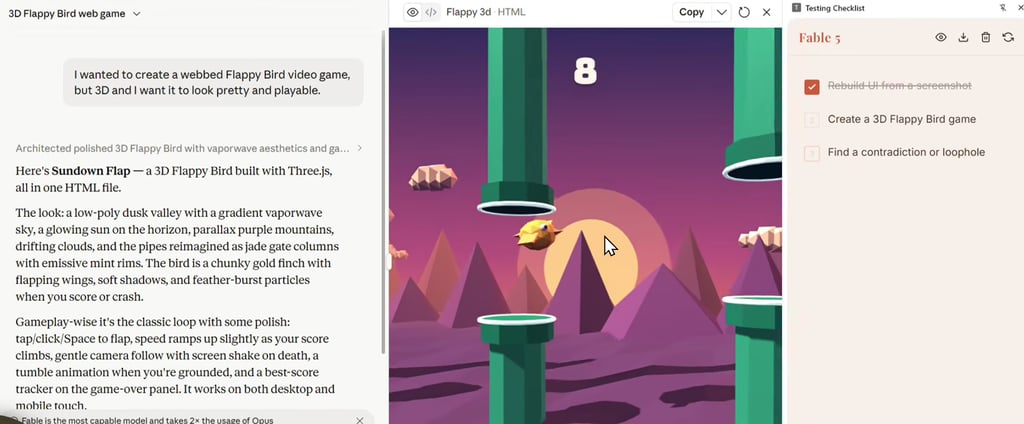
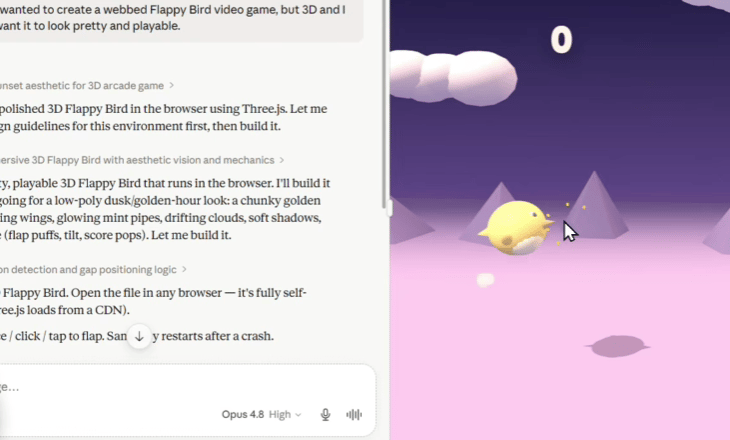
Next, it was time to test pure logical engineering. Both models were asked to write the complete code for a playable, web-based 3D Flappy Bird game using WebGL/Three.js.
The Result: This is where Fable 5 completely annihilated Opus. Opus generated a very basic, somewhat clunky version of the game. It technically worked, but it felt like a rough prototype with choppy physics.
Fable 5, on the other hand, went above and beyond. It didn't just build the game; it built a highly playable, smooth experience. It autonomously added complex parallax background scrolling effects, optimized the collision detection, and made the gravity physics feel exactly like the original mobile game. It anticipated what makes a game "fun" and coded it without any extra prompting.
The Verdict on Gaming/Logic: For heavy engineering, physics, and complex state management, Fable 5 is in a league of its own.
Image Source: Screenshot from on YouTube
Test 3: Heavy Document Analysis (Legal Loopholes)
The most important aspect of testing the fable 5 model came here based on our analysis read below we have found some interesting things
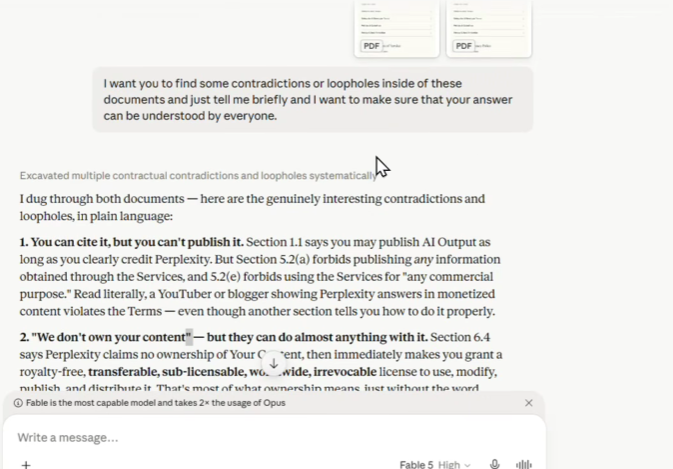
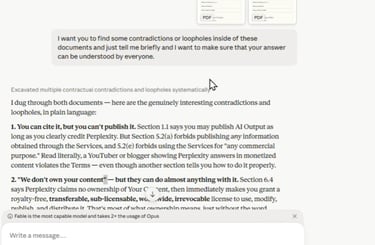
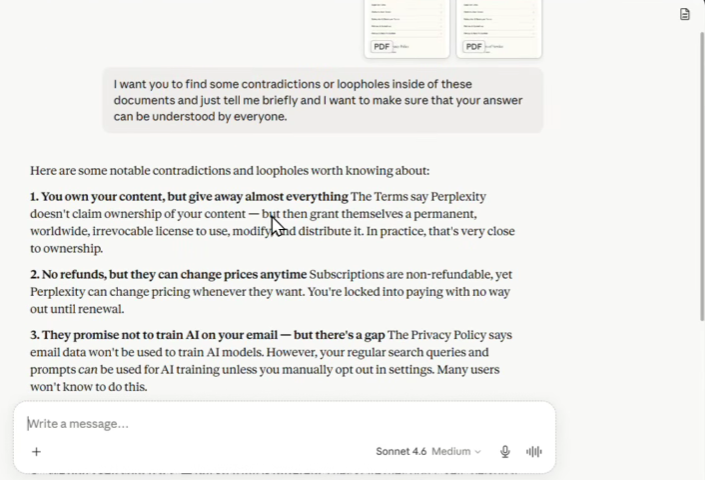
AI is incredibly useful for parsing massive documents, which makes for a perfect test of reasoning capabilities. The dense, multi-page legal terms and service documents for Perplexity AI were uploaded, and both Fable 5 and Sonnet were tasked with finding hidden loopholes or legal contradictions.
The Result: Sonnet did a very respectable job. It scanned the document and successfully identified five distinct legal points of interest that a user should be worried about.
Fable 5, however, dug much deeper. It successfully identified eight critical points, including deeply buried contradictions regarding data ownership and third-party sharing that Sonnet completely skimmed over. Fable demonstrated a terrifyingly sharp ability to parse long-form text and connect dots across different pages of the legal document.
The Verdict on Analysis: If you are a researcher, lawyer, or someone dealing with enterprise-level knowledge tasks, Fable 5 is the most thorough analyst you can hire.
Images Source: Screenshot from on YouTube
Test 4: Video Creation via Code (Remotion)
This is a big race of video creation lets who won in the end ?
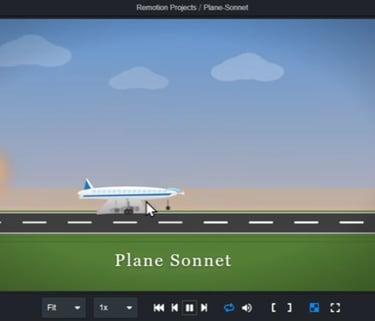
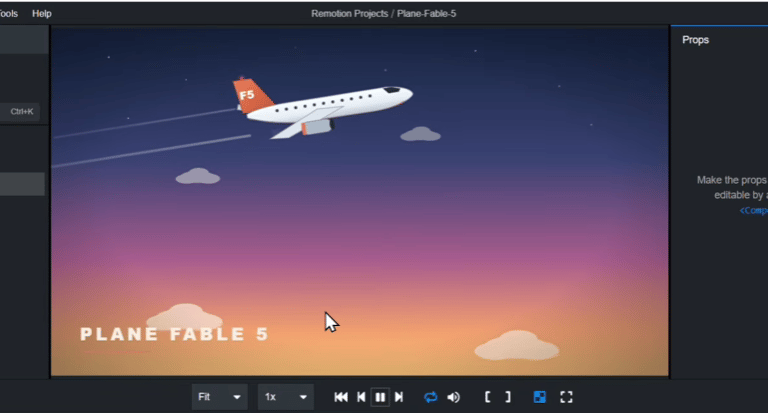
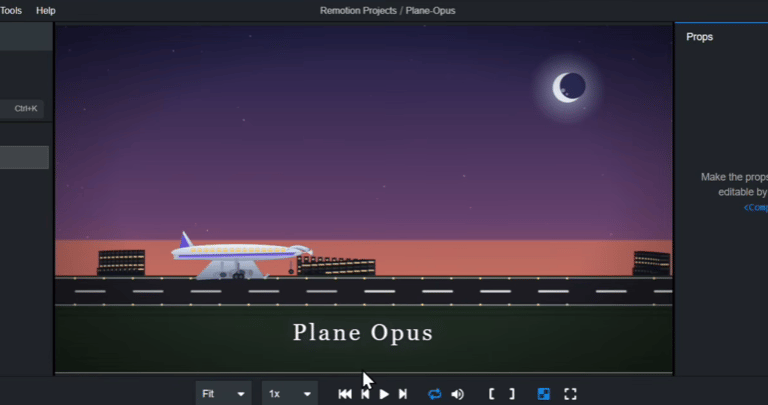
For the final test, the goal was to push the boundaries of creative coding. The models were asked to use Remotion (a framework for creating videos programmatically using React) to generate a video sequence of an airplane taking off.
The Result: Opus and Sonnet struggled to conceptualize the physical movement. Their attempts were very rudimentary—mostly just sliding a static image of a plane across the screen linearly.
Fable 5 understood the physics of the request. It generated code that simulated a realistic camera pan, added an acceleration curve to the plane's movement so it started slow and sped up, and even attempted to code in engine exhaust behaviour. The level of high-fidelity execution from pure code was mind-blowing.

Images Source: Screenshot from on YouTube
Final Takeaways: Should You Upgrade?
lets move to the final review and my opinion
There is no denying that Fable 5 is a significant step up. For complex coding, autonomous agentic workflows, and creative tasks that require high-fidelity execution, it currently has no equal. It completely outclasses Opus and Sonnet in deep reasoning and heavy engineering.
However, we need to talk about accessibility and cost. Currently, Fable 5 is only available to Pro, Max, and Enterprise subscribers until June 22nd. After this period, it is expected to be a premium, high-cost model that will burn through your API credits incredibly fast.
My Recommendation: Before you start using Fable 5 for everything, evaluate your workflow. If you are just writing basic scripts, cloning UI, or drafting emails, Opus or Sonnet are more than sufficient and much more economical. But if you need to build a 3D application from scratch or parse a 100-page legal contract? Fable 5 is worth every single penny.
Editor's Note: The real-world tests and benchmarks referenced in this review were originally performed and documented by AsapGuide. To see the full visual breakdown, the Windows 11 UI build, and the 3D Flappy Bird code in action, you can watch their original deep-dive video here: https://youtu.be/AW3TJDuViF8?si=crPNiq_-SMTEYUkl
If you have any queries and suggestions reach out below by commenting.