Evolution of Antivirus: Is Cybersecurity Software Dead?
Discover the evolution of antivirus software and why modern browsers and Windows Defender are your best defense against phishing scamsRead now for full information.
The New First Line of Defense
So, if traditional antivirus isn't protecting us from these modern threats, who is?
The answer is actually built directly into the tools you are already using. Over the last decade, Microsoft quietly transformed Windows Defender from a basic, often-ignored utility into one of the most powerful, machine-learning-driven security platforms on the planet. For the vast majority of consumers, the free version of Windows Defender handles all the common threats perfectly in the background without you ever noticing.
Furthermore, modern web browsers (like Google Chrome, Microsoft Edge, and Brave) have stepped up to become your ultimate first line of defense. Browsers now feature incredibly advanced real-time tracking that identifies fake login pages, blocks malicious downloads, and stops social engineering attacks before the website even loads on your screen.
The security is no longer an external software you have to buy; it is baked directly into the DNA of the internet.
With Microsoft and Google giving away top-tier security for free, you might assume that companies like Norton, McAfee, and Kaspersky went bankrupt.
They didn't. Instead, they evolved.
Antivirus companies realized they could no longer survive just by scanning for malware. Today, these companies have rebranded themselves as comprehensive Cybersecurity Solution Providers. When you buy a subscription from them now, malware scanning is just a tiny bonus feature.
What you are paying for is a massive suite of digital life-protection tools. These modern subscriptions include high-end VPNs to encrypt your traffic on public Wi-Fi, Dark Web monitoring to see if your passwords have been leaked, encrypted password managers, and identity theft insurance. They evolved from protecting your computer to protecting your identity.
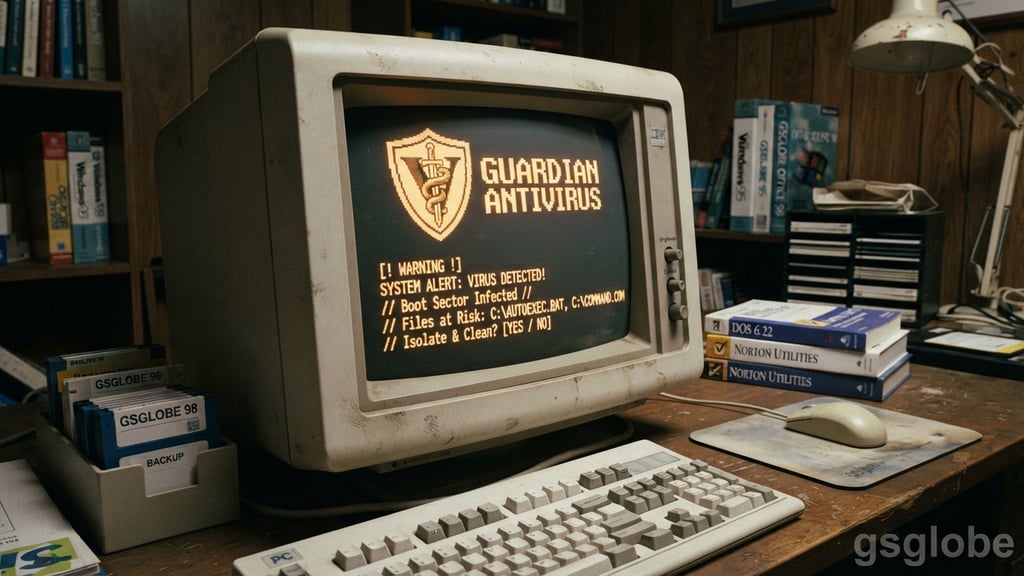
If you owned a computer in the 2000s or 2010s, you remember the absolute panic of getting a computer virus. Back then, buying a new PC meant you immediately had to drive to an electronics store, buy a physical CD-ROM of Norton or McAfee, and install it before you ever opened a web browser. Antivirus software wasn't just an option; it was the most essential piece of software on your machine.
But think about it for a second... when was the last time you actually paid for a dedicated antivirus program?
As a tech blogger here at GSGLOBE, I spend a lot of time analyzing cybersecurity trends. A fascinating shift has happened right under our noses. Traditional antivirus software isn't exactly dead, but it has completely evolved because the nature of the internet has fundamentally changed.
Let's break down why you probably don't need traditional antivirus anymore, and how hackers have completely changed their strategies to target you
The Shift in the Threat Landscape
To understand why antivirus software changed, we have to look at how hackers changed.
In the past, the main goal of a hacker was to write malicious code (malware or trojans) that would aggressively infect your computer's hard drive. Traditional antivirus software worked like a police scanner. It maintained a massive database of "virus signatures" (essentially digital fingerprints of known malware). It scanned every file on your computer, looking for a match to one of those signatures, and deleted the file if it found one.
But today, threats have entirely shifted. Hackers realized that trying to crack through modern computer operating systems is incredibly difficult. Why spend months writing a complex virus to break into a computer, when you can just trick the human being into handing over the keys?
Today's attacks are almost entirely browser based. We are dealing with phishing emails, social engineering scams, and highly realistic fake login pages. The modern hacker isn't trying to corrupt your hard drive; they are trying to trick you into typing your banking password into a fake website.
Traditional antivirus scanners looking for file signatures are completely useless against a fake website.
My Final Takeaway
We are living in an era where operating systems and browsers are incredibly secure out of the box.
If you practice basic internet common sense—like not clicking on suspicious email links, using Two-Factor Authentication, and keeping your browser updated—you realistically do not need to buy traditional antivirus software ever again. Windows Defender has your back.
However, if you frequently use public Wi-Fi, or you want the peace of mind that comes with identity theft protection and a VPN, the modern "Cybersecurity Suites" are still incredibly valuable.
What do you think? Do you still pay for a third-party antivirus program, or do you just trust Windows Defender and your browser to keep you safe? Let me know in the comments below!