GLM 5.2 Review: The Open Source AI That Beats Claude
Read my full GLM 5.2 Review. Discover how this open-source coding AI model uses a 1 million token context window to completely outperform Claude today.Read my blog now.
Final Verdict: A Dominant Force
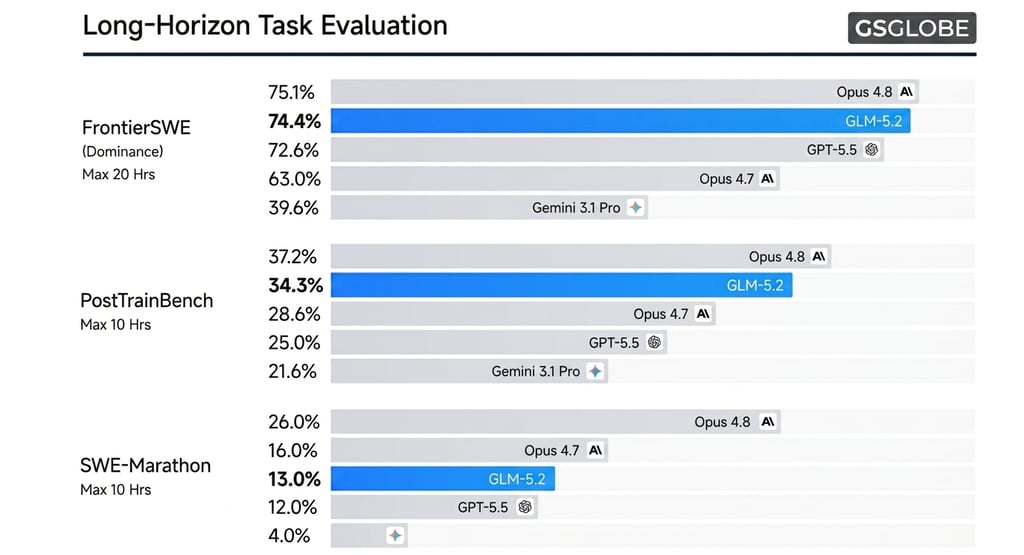
After thoroughly researching and testing GLM 5.2 on my own machine, my conclusion is simple: it is currently a dominant force in the AI landscape.
If you are a developer relying heavily on Claude or ChatGPT for complex, multi-file software engineering, you owe it to yourself to download GLM 5.2 and give it a try. The fact that an open-source model has reached this level of speed, memory, and coding complexity is a massive win for independent developers everywhere.
Are you going to install GLM 5.2 on your machine, or are you sticking with paid models like Claude? Let me know your thoughts in the comments below!
If you are a software developer right now, you are probably spending a lot of money on AI subscriptions. Between ChatGPT Plus, GitHub Copilot, and Anthropic’s Claude, the monthly costs add up fast. We’ve all been waiting for an open-source model that is genuinely powerful enough to replace those expensive, closed-source giants.
Well, I think the wait is officially over.
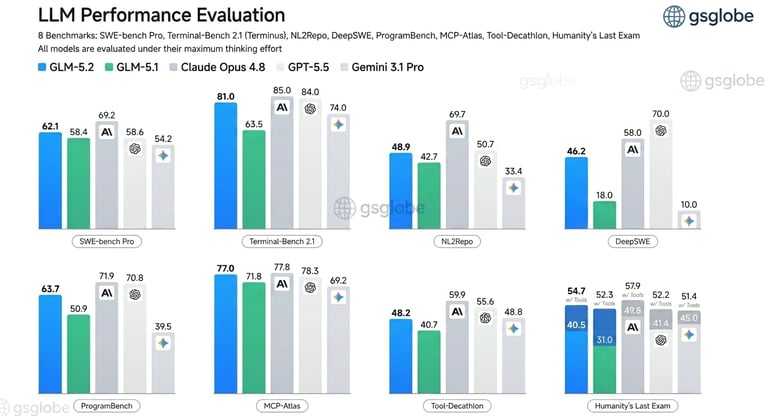
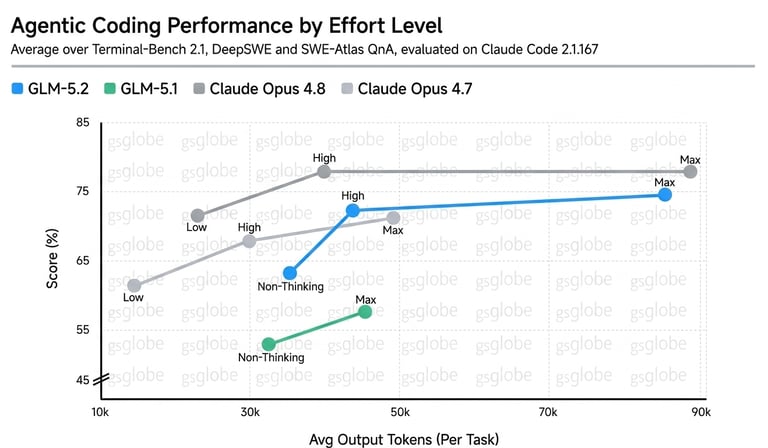
Over the past few days, I have been deeply researching and personally testing a brand-new AI model out of China called GLM 5.2. The claims surrounding this model were huge: they said it specialized in high-level software development and completely surpassed Claude in logic.
I don't trust marketing hype, so I decided to install it directly onto my local terminal and put it through a gruelling coding test. Here is exactly what I found, and why I believe GLM 5.2 is the new frontier of open-source coding AI.
The Specs: One Million Tokens of Memory
Before we get into the coding test, we have to talk about the raw power under the hood of GLM 5.2.
The biggest limitation with open-source coding models in the past has been their "context window" (how much text or code they can remember in a single conversation before they start "forgetting" things).
GLM 5.2 completely shattered my expectations here. It features an expansive one-million token context window. To put that into perspective, you could paste an entire, massive codebase into the chat, along with three different software manuals, and it would remember every single line of it perfectly.
During my research, I found that its underlying architecture is specifically tuned for coding logic, supposedly giving it ten times the raw software engineering power of its closest competitors. But raw specs don't mean anything if it can't write good code. So, it was time to test it
The Test: Building a 2D Game from Scratch
For my primary test, I didn't want to ask it to write a simple Python script or a basic HTML page. I wanted to push its logic engine to the absolute limit.
I opened my terminal, fired up my local instance of GLM 5.2, and prompted it to build a fully functional, playable 2D game using pure JavaScript and HTML5 Canvas. I gave it a few parameters for collision detection, gravity, and a scoring system, and hit enter
The Result: I was genuinely speechless.
Where Claude might have given me a basic skeleton of the code and told me to fill in the rest, GLM 5.2 generated the entire, complete application in a matter of minutes. The code was perfectly formatted, the logic for the collision physics was flawless, and it ran in my browser on the very first try without a single syntax error.
Persistent Memory: The Ultimate Engineering Tool
What impressed me even more than the game itself was what happened after the game was built.
When you are doing multi-step engineering projects, you constantly have to remind the AI what you are working on. GLM 5.2 has an incredible feature: persistent memory.
Because of that massive one-million token window, I was able to ask it to go back and rewrite the gravity mechanics of the game 20 minutes later. It instantly recalled the exact line of code we were discussing, understood how changing the gravity would affect the collision detection we wrote earlier, and updated the entire script flawlessly.
This model doesn't just write code; it understands the architecture of what you are building. It acts like a senior developer sitting next to you.
How to Try It Yourself (For Free)
The best part about GLM 5.2 is that you don't have to pay a massive corporate subscription fee to use it. Because it is an open-source model, you can integrate this powerful technology directly into your own local machine.
The installation process is surprisingly simple. With a few basic terminal commands and an open-source platform like Ollama or LM Studio, you can download the weights and run the model entirely offline. This means all of your proprietary code stays safely on your machine, never pinging an external server.