Neuracle Neo Chip: How China Just Beat Neuralink
Discover how the new Chinese Neuracle Neo chip is healing paralyzed patients and why it is much safer than Elon Musk's Neuralink.Checkout My latest blog ...
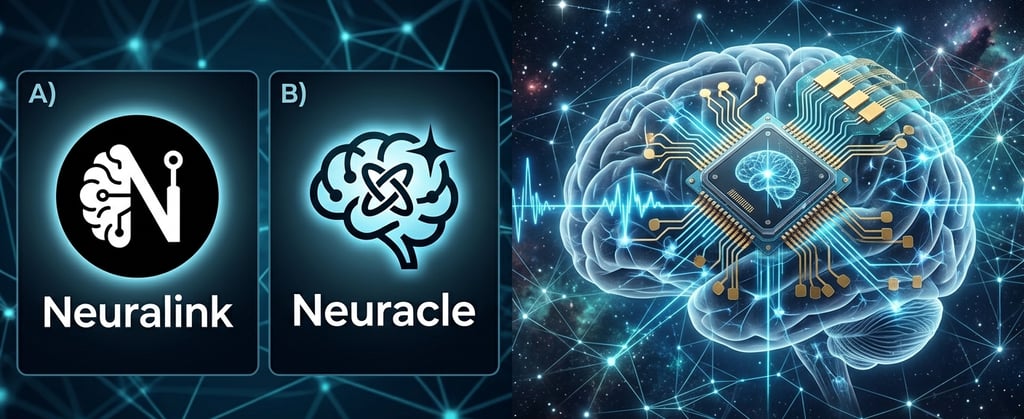

Drop your thoughts in the comments below, and let’s debate!
Today I coming with another important Topic about the future of health that is currently trending one.. lets go..
When we talk about the future of neurotechnology, there is really only one name that dominates the headlines: Elon Musk’s Neuralink. For the last few years, the entire tech world has been captivated by the idea of brain-computer interfaces (BCIs), waiting to see when Musk's futuristic chips will finally hit the mainstream medical market.
But while everyone was staring at Neuralink, a quiet but monumental shift happened on the other side of the globe.
I’ve been tracking global biotech developments, and the biggest news of the year didn't come from a flashy California press conference. A Chinese startup called Neuracle has completely bypassed Neuralink by gaining commercial approval for their own revolutionary brain-computer interface. They didn't just beat Musk to the finish line; they did it with a device that might be safer and more accessible.
Let's dive into the "Neo" chip, how it works, and why the global race to control your brain signals has just been blown wide open.
What is the Neo Chip? (And How It Moves Hands)
When you hear "brain-computer interface," you might imagine someone controlling a mouse cursor with their thoughts. While Neuralink has focused heavily on digital interactions (like playing chess on a computer), Neuracle has taken a much more physical, immediate approach to helping paralyzed patients.
Their flagship device is known as Neo. Instead of just moving pixels on a screen, the Neo chip is designed to translate neural electrical signals directly into physical, real-world movement.
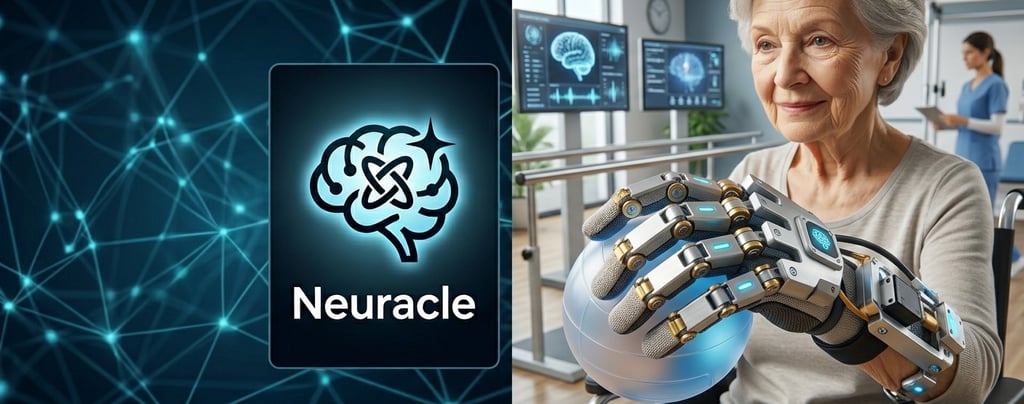
It does this by communicating wirelessly with an advanced robotic glove worn by the patient. When a paralyzed patient thinks about opening their hand to grab a cup, the Neo chip reads that exact electrical frequency in the brain, transmits it to the robotic glove, and the glove physically moves the patient's hand to execute the action.
It is basically turning science fiction cyborg technology into a real, accessible medical treatment.
The Biggest Advantage: Why It is Safer Than Neuralink
If you are going to let a surgeon, put a microchip in your head, your biggest concern is obviously going to be safety. This is where I think Neuracle completely outclassed Neuralink's current approach.
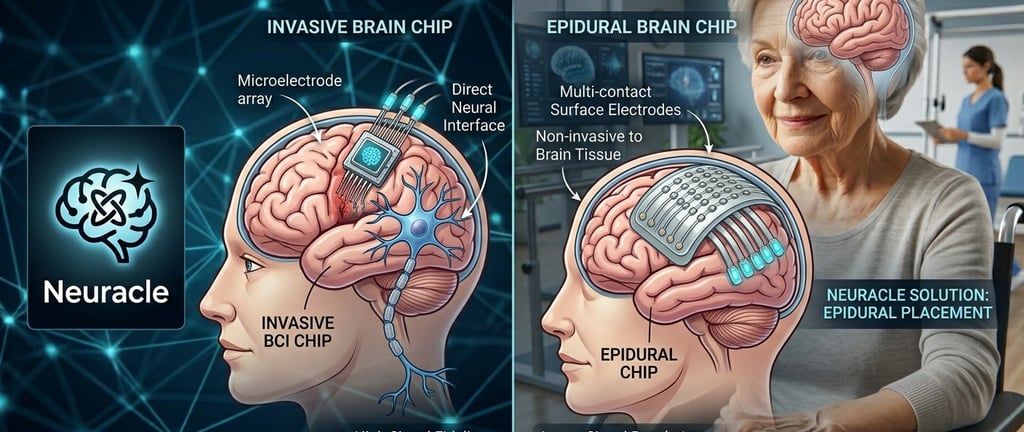
Neuralink's device is highly invasive. The surgery requires a robot to literally stitch microscopic threads inside the delicate tissue of the brain. While this allows for very high-fidelity data reading, it is incredibly risky and causes scar tissue over time, which can degrade the signal.
The Neo chip uses a radically different approach. Instead of piercing the brain tissue, the Neo sensor is placed epidurally meaning it rests entirely on the protective layer covering the brain (the dura mater), just beneath the skull.
Because it doesn't penetrate the brain matter, the surgery is significantly faster, drastically safer, and poses almost zero risk of damaging the patient's delicate neural pathways. It trades a tiny bit of signal clarity for a massive leap in patient safety, which is exactly why it was able to secure commercial hospital approval so quickly.
The Miracle of Long-Term Healing
The immediate results of the Neo clinical trials are amazing on their own: paralyzed individuals are regaining the ability to grasp, hold, and interact with the physical world.
But as I dug deeper into the trial results, I found something even more incredible. The technology isn't just a temporary crutch.
According to medical reports from the active hospital settings in China, some patients are showing signs of long-term neurological healing. Because the brain is constantly sending the signal to move, and the glove is immediately executing that movement, the brain begins to "re-wire" itself (a process known as neuroplasticity). Over time, the neural pathways begin to repair themselves, meaning the technology is actively healing the paralysis, not just masking it.
This development signals a massive, geopolitical shift in the global medical landscape. For decades, the United States has been the undisputed king of pushing experimental tech from the lab into the commercial market.
But China has just flipped the script. While American companies are still tangled in lengthy FDA experimental trials and battling bad PR over surgical complications, China has successfully moved this technology out of the experimental labs and into active, commercial hospital settings.
The race to control the future of neurotechnology is no longer an American monopoly. The new benchmarks for success in the BCI industry are no longer just about who can build the highest-bandwidth chip. It is now about accessibility, safety, and who can get the device into the skulls of the patients who need it most.