Why AI Needs Orbital Data Centers in Space ! (My Research)
Discover why ground-based infrastructure takes too long to build, and why the future of AI scaling relies on orbital data centers in space.checkout the blog .
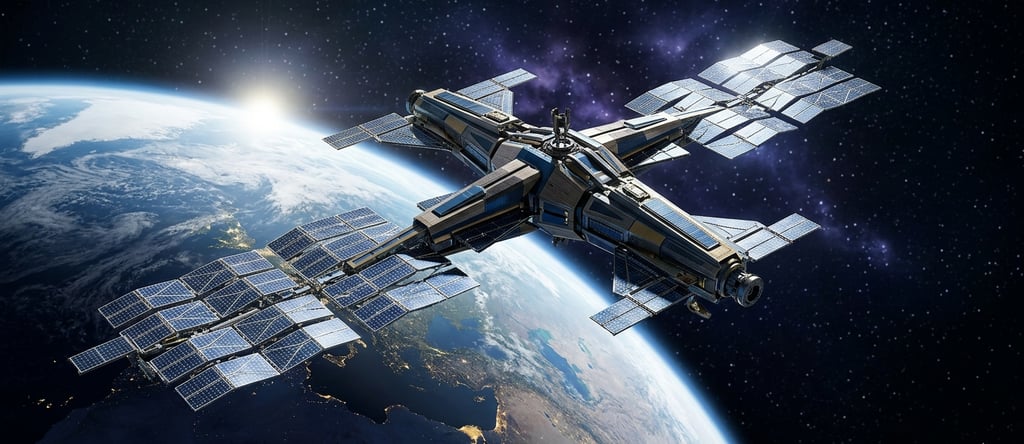
The Ultimate Cooling System: The Vacuum of Space
If you have ever stood inside a server room, you know how incredibly loud and hot it is. Cooling systems make up a massive percentage of a data center's operating cost and energy consumption. AI GPUs run notoriously hot and keeping them from melting requires thousands of gallons of chilled water every day.
Space solves this instantly. Deep space is incredibly cold—roughly -270 degrees Celsius (-454 degrees Fahrenheit).
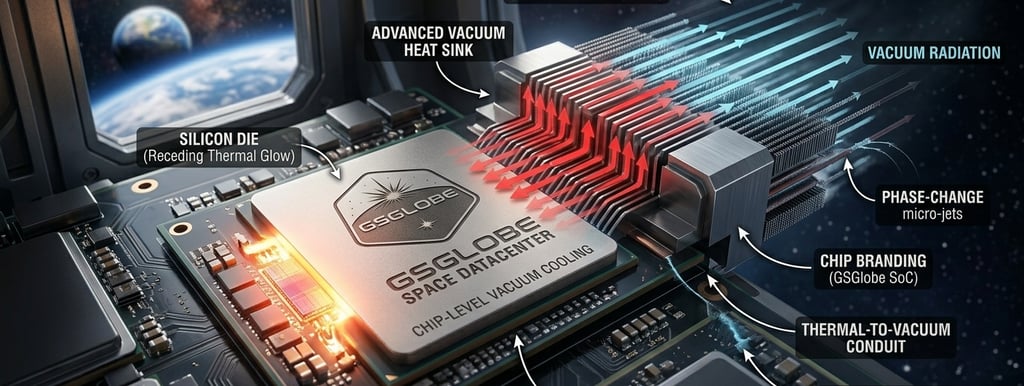
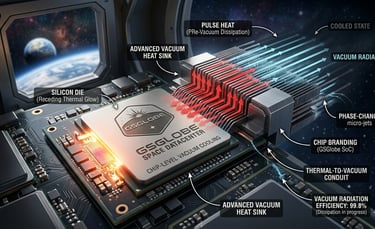
While heat dissipation in a vacuum presents its own unique engineering challenges (since heat can only escape through radiation, not convection), the lack of ambient atmospheric heat means that cooling systems can be entirely reinvented. By designing server farms that radiate heat into the absolute zero of the cosmoses, tech companies can eliminate the need for massive, water-wasting HVAC systems on Earth.
Alright are you ready for the most insane topic recently I came across a podcast that blew my mind about the futre of ai check below for the most mind blowing topic that we are going talk about in my blog.. lets goo into space for a while..
Artificial Intelligence is growing at a rate that is frankly terrifying. As companies race to build bigger, smarter, and faster Large Language Models (LLMs), they are running into a massive, physical wall: Earth simply isn’t big enoughor fast enough—to hold them.
The limiting factor for the future of AI isn't software; it's infrastructure. Training a cutting-edge AI model requires thousands of GPUs, massive cooling systems, and an unimaginable amount of electricity. Ground-based infrastructure is struggling to keep up.
Recently, visionary insights from aerospace leaders like Pawan Kumar Chandana have pointed toward a radical, science-fiction-sounding solution that is rapidly becoming a reality: Orbital Data Centers.
Instead of building massive server farms on Earth, the next logical step for AI is to move infrastructure into space. Here is why the data migration of the future is going upward
The Speed Bottleneck: Earth takes Too Long
To understand why tech giants are looking at the stars, you have to understand the timeline of building a massive, one-gigawatt data center here on the ground.
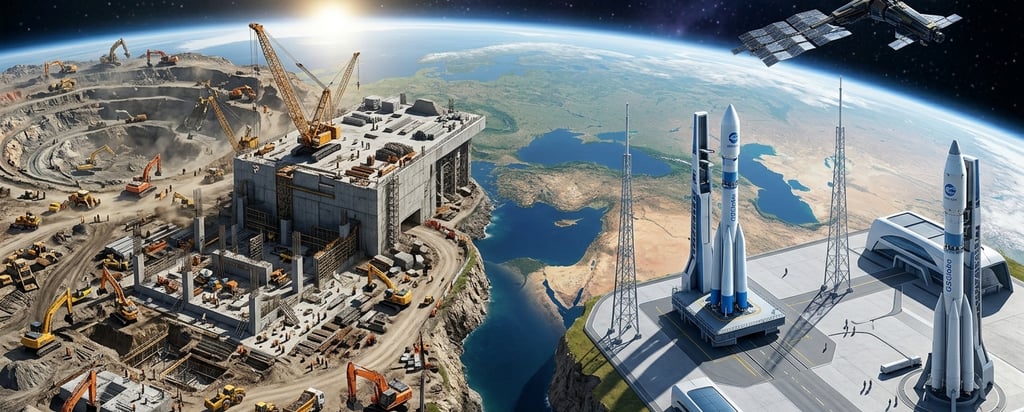
If a tech company wants to build a state-of-the-art AI facility today, it isn't just about pouring concrete. They have to acquire vast amounts of land, navigate years of local zoning laws, secure massive water rights for cooling, and completely overhaul local electrical grids to handle the power load. Realistically, taking a one-gigawatt data center from the planning stage to fully operational takes anywhere from five to ten years.
In the AI industry, where models double in capability every six months, waiting a decade for a building to be finished is a death sentence for innovation. Humanity simply does not have the patience for ground-based construction anymore.
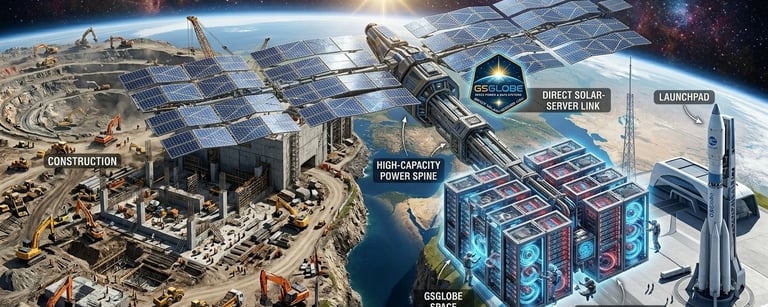
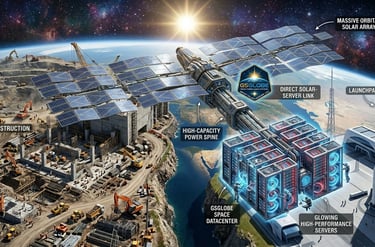
According to Chandana's insights, establishing equivalent infrastructure in space could potentially be done in just one year. Once the launch logistics are perfected, sending modular server racks into orbit and assembling them in space completely bypasses the red tape, land disputes, and grid limitations of Earth.
A major problem with Earth-based data centers is power. AI demands electricity at a scale we have never seen before, putting immense strain on local power grids and relying heavily on fossil fuels, which creates massive carbon footprints.
In orbit, the power problem disappears. Space offers an uninterrupted, unlimited supply of solar energy.
Solar panels on Earth are highly inefficient; they are blocked by clouds, weather patterns, and the simple fact that it is dark for half the day. An orbital data center in the right trajectory would experience continuous, 24/7 sunlight without the interference of an atmosphere. This means the AI servers could run purely on clean, unlimited solar radiation, completely solving the energy crisis that is currently threatening to halt AI scaling.
The Logistics Problem: What We Need Next
Of course, we cannot simply strap a server rack to a firework and send it up. Moving AI infrastructure to space requires a complete revolution in aerospace logistics.
As Chandana notes, this vision requires technology that allows for launches with the regularity of commercial aircraft. We need massive, fully reusable rockets that can take off, deploy modular data centre components, and land back on Earth multiple times a week.
Thankfully, the aerospace industry is already moving in this direction. With companies like SpaceX, Blue Origin, and Skyroot pushing the boundaries of rapid launch reusability, the "aircraft-style" rocket of tomorrow is already on the horizon.

Final Thoughts: The Upward Migration
The enterprise shift toward AI is unstoppable, but our planet's physical resources are finite. We simply do not have the land, the power, or the time to build ground-based data centers fast enough to keep up with the intelligence explosion.
Orbital data centres are no longer just a sci-fi dream; they are a logistical necessity. The companies that figure out how to process data in the cold, solar-drenched vacuum of space will be the ones who dominate the next era of computing.
The future of AI isn't in Silicon Valley. It's in orbit.
What are your thoughts on orbital data centers? Do you think the cost of launching rockets is worth the unlimited solar energy in space? Let me know in the comments below